On teenagers, who scare me for exactly the same reasons I love them
Зміст
That Scariest Kind of People?
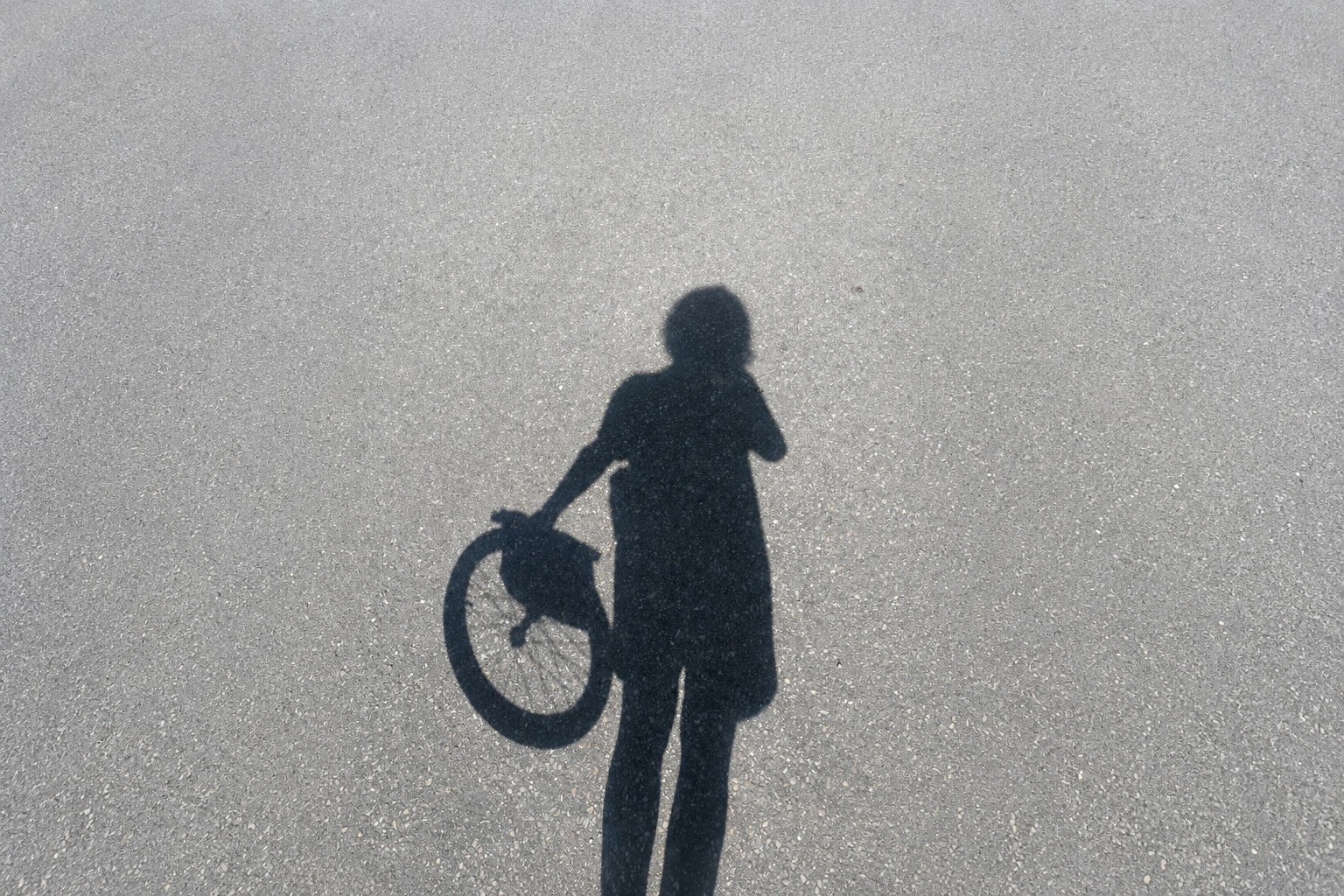
After the recent story of my son’s stolen bicycle, I found myself thinking about teenagers again. Of course, I don’t know who exactly stole our bike, but the whole thing has a distinctly teenage signature: unscrew the frame, leaving the locked wheel at the bike rack, then throw the rest of the bicycle into the river. The local madman?
I’ve always said that teenagers are the scariest category of people to me, scarier even than simply stupid people. Because you never know what to expect from them. The teenage signature is basically to do some random fucked-up shit and see what happens. You just don’t want to become the object of that fucked-up shit.
I thought about this a lot, and at some point it occurred to me that if anyone could write a really good book about teenagers, it would be Backman. No one else could quite do it. Maybe I should drop him a hint or something.
And then I pick up the latest book by Fredrik Backman, which I bought about six months ago and had been planning to read this summer — and I’m like, holy shit.
First, the dedication:
“For those who are young and want to create something. Do it.”
How lovely, I think. They really do have all that energy they don’t always know what to do with.
Then a quote:
“The world is often unkind to new talent, new creations. The new needs friends.”
Anton Ego
True, I think. Without support, it’s easy to get really angry.
And then the opening of the first chapter, which made me laugh out loud with sheer delight:
“Louisa is a teenager, and therefore that best kind of people. The proof is quite simple: little kids think teenagers are the best people, and teenagers think teenagers are the best people. The only people who don’t think teenagers are the best people are adults. Obviously because adults are that worst kind of people.”
Fredrik Backman — My Friends (in my unofficial translation)
Bores
Adults judge teenage behaviour according to adult logic. Why did you do that? we ask, and that is a very adult question. It assumes that first the person had a goal, then considered the possible ways of achieving it, made a choice, and went off to sink someone else’s bicycle. But what if it was more of a veni, vidi, vici situation? What if this is a living laboratory for experiments with relationships, boundaries, and what adults are even made of? Teenagers probably don’t spend much time thinking about the fact that adults are, among other things, made out of teenagers, because the evidence suggests otherwise: adults are generally creatures from whom all life has been thoroughly squeezed out. Quite an ugly sight.
What If It’s Not a Bug but a Feature?
Teenagers aren’t unfinished adults whom nature forgot to equip with the latest security update. During adolescence, different systems in the brain change at different rates. Sensitivity to reward, novelty, and social approval increases before the ability to control impulses in emotionally charged situations fully stabilises. Things get especially fun when other teenagers are around.
Research shows that teenagers take more risks even when a peer is merely watching them. And it isn’t necessarily because they don’t understand the risk. In one experiment, they were explicitly told the probabilities of winning and losing — yet when they believed a peer was watching their decision, they were still more likely to choose the risky option, including when the probability of losing was high.
It’s a beautiful experiment because it demolishes one of adults’ favourite fantasies: if you explain the consequences well enough to a teenager, they’ll make the sensible choice. A teenager may understand the consequences perfectly well. They’re just not necessarily all that interested in them, especially considering that those consequences aren’t guaranteed anyway.
When Your Peers Are Watching
Safety isn’t the primary value. Quite the opposite: a certain amount of danger can itself have value. Novelty, risk, the need to be among your own kind — those do. What matters here isn’t the abstract “what will people say?” that adults love so much, but the feeling that you’re one of your own and that together you stand united against boringness.
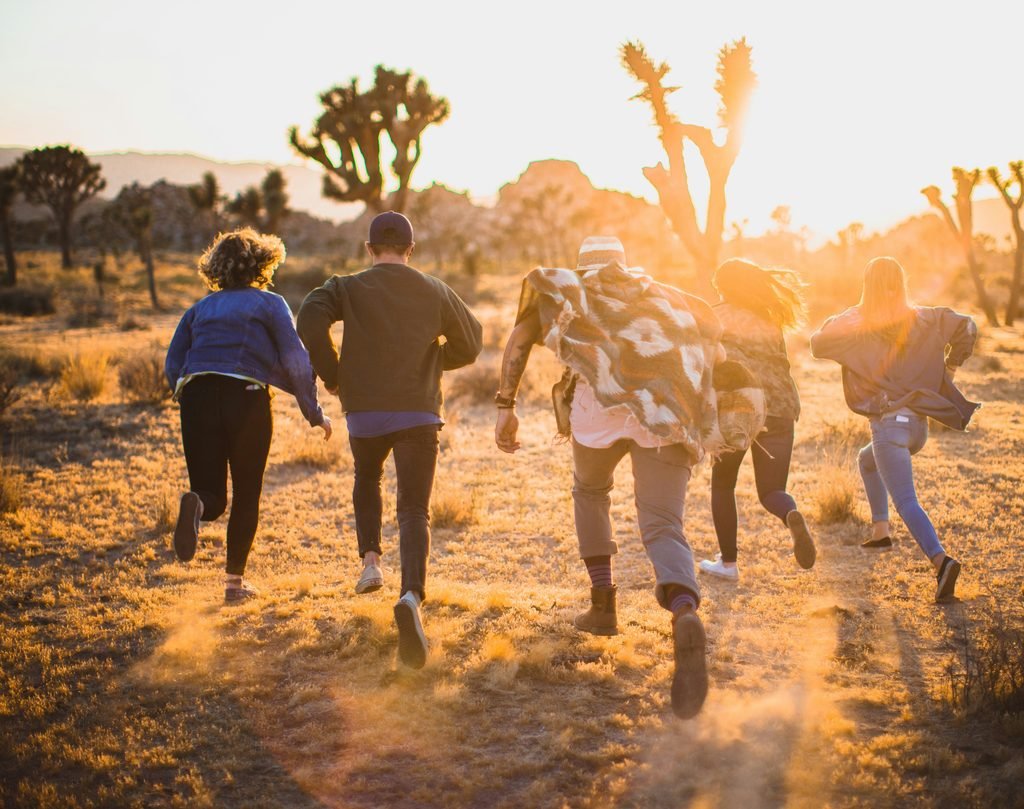
But that same heightened teenage sensitivity to the social environment doesn’t work only in the direction of risk. Under some conditions, the presence of peers can encourage risky behaviour; under others, it can strengthen prosocial behaviour: in one experiment, teenagers became more generous when a friend was watching them make the decision.
And that reminded me of something I posted on Facebook six years ago.
Guys, You’re Cool
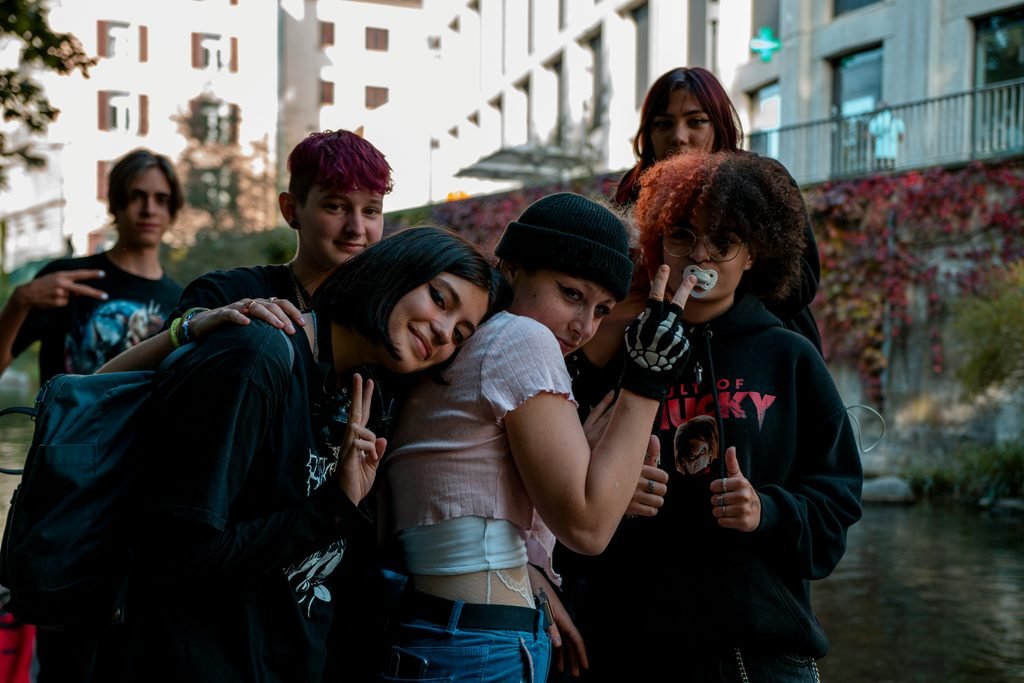
“I keep wanting to say a few words about the youth. About how they got for free everything we fought for — coloured hair, tattoos, piercings, and statement glasses, the kind my generation used to get punched in the face for because they looked nerdy. About the level of confidence in their blood. About their values. I don’t know what they are, exactly, but you can see those values on their faces! About bikes and scooters being fashionable. Sports, veganism, eco-living (not universally, obviously, but it’s definitely a trend). About how I’m afraid to go up to them and say what I want to say because who the hell knows how you’re supposed to talk to these people, and we, the ones with inferiority complexes, were never allowed to say things like this: guys, you’re cool. Maybe it’s something personal rather than generational, I don’t know. So just in case I keep my distance, grinning blissfully and indecently into my moustache: God, they’re adorable.
But at least I can say it here, where I’m more likely to find their mothers than the teenagers themselves, lol: guys, you’re cool, you’re a joy to look at, keep going.”
This way of seeing them is closer to Backman’s, and there’s really no contradiction here. What scares me about teenagers and what I like about them are essentially the same thing.

Rules They Never Agreed To
Every generation of teenagers arrives in a world where a large part of the rules already exists, and they have no natural reason to consider those rules sacred. We adults, meanwhile, remember how you’re supposed to behave at a job interview, what people will say, why you shouldn’t dye your hair green, why a stable job is better than a weird one, why a bicycle is supposed to stay where its owner left it. A significant share of these rules are perfectly reasonable, but the problem is that at some point we often stop questioning things — it takes energy, and we don’t have nearly as much of it anymore.
And then along comes a person who hasn’t yet learned the difference between “you can’t do this because someone will get hurt” and “you can’t do this because that’s just not how things are done,” and starts methodically testing both kinds of rules against the wall.
We need these people. They determine where we go next. Not always somewhere we like, admittedly, but the less resistance we put up, the more we’ll move in the direction evolution needs us to go.
Strength Test
A teenager stress-tests everything that has been instilled in them, looks for hypocrisy, rejects whatever fails the test, crashes against their parents — and at the same time needs those parents to withstand the impact. Because, as Hanna Krytska once put it, they can barely withstand themselves. Will that little island of safety still be there when you leave?
Because separation isn’t just learning to cook pasta for yourself and renting an apartment one day. To become a separate person, you have to entertain, at least temporarily, the possibility that the people who have been explaining the world to you since birth may be full of shit. Otherwise you don’t get a separate person; you get an obedient extension of the parents — the unproductive dream of many.
That’s exactly the destructive and creative mixture that both scares and fascinates me about teenagers: persistence, uncompromisingness, sensitivity to hypocrisy, and extraordinary vulnerability. We see instability where what’s actually happening is a very rapid recalibration of the system. A person tries things, some of which they may be deeply embarrassed by twenty years later. But that’s how a personality takes shape.
It’s a brief period in life when a person is already smart enough to see that the world was made by people, but hasn’t yet been domesticated by it enough to automatically agree to leave everything as it is. They’re intensely alive creatures: they doubt, experiment, break things to see whether they’ll break, have fun, search, aren’t afraid to leave their comfort zone. Adults, meanwhile, are often all about maximum comfort and stability, because life is unsettling enough as it is.
No Built-In Safety Switch
The only problem is that this mechanism doesn’t distinguish between good rules and bad ones. Evolution didn’t give teenagers a separate neural switch saying, “Rebel only against unjust social norms, but listen to your mother, don’t smoke, and leave other people’s bicycles alone.” That would have been very convenient, especially for mothers.
When you have to test whether you really need to live the way your parents lived, you might as well test what happens if you dye your hair green, fall in love with someone you weren’t expected to fall in love with, tell an authority everyone else is used to obeying to go fuck themselves, climb somewhere you’re not supposed to, get drunk, and do something you definitely shouldn’t do.
We want young people to change the world, but we want our particular child to change it carefully, well-fed, wearing a hat, home by ten, and preferably not today.
But the mechanism that allows young people to move away from what they already know, seek out novelty, risk their social status, enter new groups, and build a life outside the family inevitably produces a certain amount of stupidity along the way. The attraction to novelty and reward, and the heightened orientation towards peers, have deep evolutionary roots: similar changes during adolescence have been observed in various mammalian species.
In other words, doing some random fucked-up shit and see what happens isn’t only a description of the problem. It’s also a way of finding out what actually happens.
That Best Kind of People
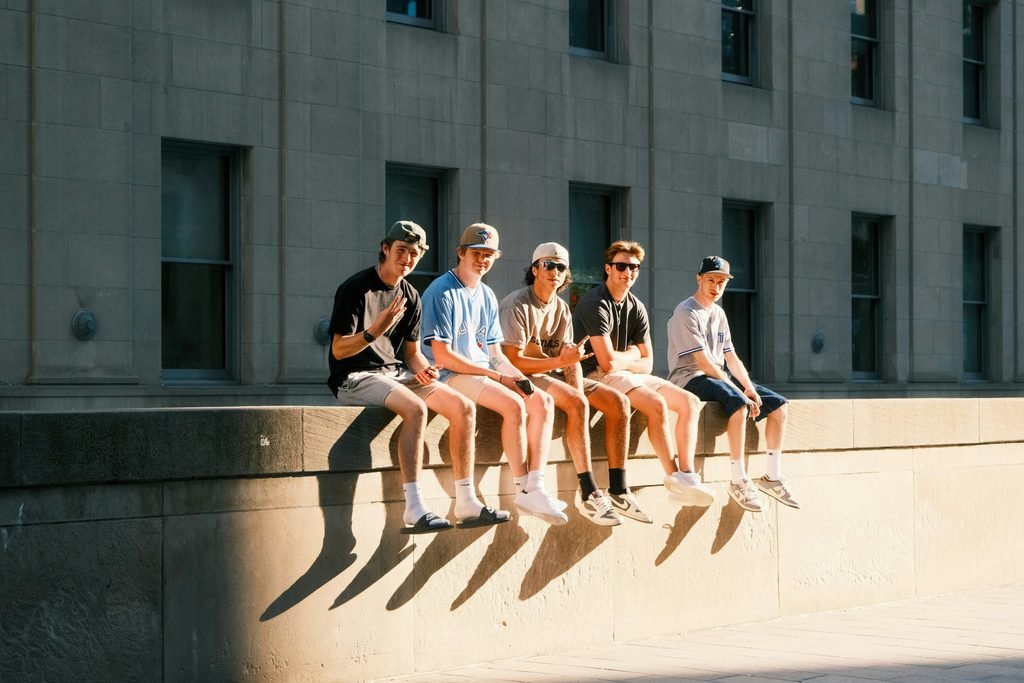
Adults have learned to do their stupid shit very convincingly: with rationales, budgets, job descriptions, strategy documents, and PowerPoint presentations. We rarely do something just to see what happens. We already have a pretty good idea what will happen, and mostly we want the same thing that happened yesterday to happen again, only preferably a little more comfortably.
An adult can destroy an entire river and call it infrastructure development. A teenager will sink some random bicycle in it — for illustrative purposes.