I once wrote about the illusion of invisibility. This time, I want to write about the illusion of visibility.
Зміст
Look at This With Me
A few days ago, I saw a rainbow. A huge, beautiful one. My son and I spent our walk home running around and taking pictures of it. A man was walking toward us. The rainbow was right behind him, but he couldn’t see it. Excited, I gestured for him to turn around. He had to see it. He turned around, but instead of seeing the rainbow, he saw me. A woman. A woman who had noticed him. A woman who wanted something from him. A woman who seemed interested in him.
Another day, I took a nice selfie and posted it on Instagram. The attention it received wasn’t directed at the photograph but at me. After a few hours, I deleted it and found myself reflecting on why. The feeling it triggered was remarkably similar to the one I experienced during the rainbow incident. I could clearly sense that the attention was directed at me rather than at the image itself. Yet even when posting my own photo online, I had no desire to become the main object of that attention.
When we talk about attention, we usually treat it as a single thing that people either enjoy or dislike. But it seems to me that there are at least two fundamentally different kinds of attention.
The first can be described with a simple phrase: “Look at this with me.” When we recommend a book, share a song, take friends to a museum, point out a sunset, or send someone an article that moved us, we are not asking them to look at us. We are inviting them to look in a particular direction together with us.
Many human relationships are built on precisely this shared gaze. Friendships often begin not because two people become interested in each other, but because they become interested in something third: a book, an idea, a political cause, an event, a shared grief. My own child was born out of shared grief. In such moments, we are not the center of attention. We are guides directing attention elsewhere.
Look at Me
The second mode of attention can be described as: “Look at me.” There is nothing inherently wrong with it. All human beings need recognition, intimacy, and the feeling that they matter. For some people, style itself is a way of making themselves visible and understandable.
The problem begins when a person ceases to be a participant in a conversation and becomes an object of observation. At that point, attention changes its nature. It no longer moves between people but settles on a person, who is then evaluated, interpreted, classified, sexualized, romanticized, judged, or used as confirmation of someone else’s worldview.
Some people are said to “love attention.” Yet I suspect many highly visible people spend a considerable part of their lives trying to regulate their own visibility. The issue is not whether one likes or dislikes attention as such. Different forms of attention simply feel profoundly different.
Grey as a Social Technology
For the last two years, I have mostly worn grey. Occasionally I try to break out of this pattern, but at this stage of my life I rarely feel comfortable in other colours. It has even become a running joke in my family chat whenever I acquire yet another grey sweater.
Of course, this is not merely an aesthetic preference. Clothing does not only decorate; it also regulates social contact. If a person naturally attracts attention through their voice, emotional intensity, expressiveness, way of thinking, or simply through their presence, additional visual intensity acts as an amplifier.
As I get older, I increasingly think of visibility as a resource. We tend to see it as something inherently positive, but every form of visibility comes with a cost. The more people look at you, the more they interpret you. The more they interpret you, the more energy you spend dealing with other people’s ideas about who you are. Constant visibility exhausts me.
In Spain I was drawn toward colour and floral patterns, even though I usually prefer monochrome clothing. In Sweden, I am grey. This is not only about geography. In Spain I was mostly resting and enjoying life. In Sweden I work hard. I am overstimulated by my own intellectual activity and by the sheer number of things I am trying to do. Additional attention drains what little energy I have left. Especially male attention. The “look at me” kind.
I do not want to be visible primarily as a body (other than those cases when I’m on a pedestrian). I want to exchange ideas, share joy, draw attention to phenomena, and talk about things that exist beyond myself.
One can enjoy being visible as a consciousness while struggling to be visible as an image. One can love conversation and dislike being scrutinized. One can enjoy dialogue and dislike being scanned.
The Problem Is Not Sexualization
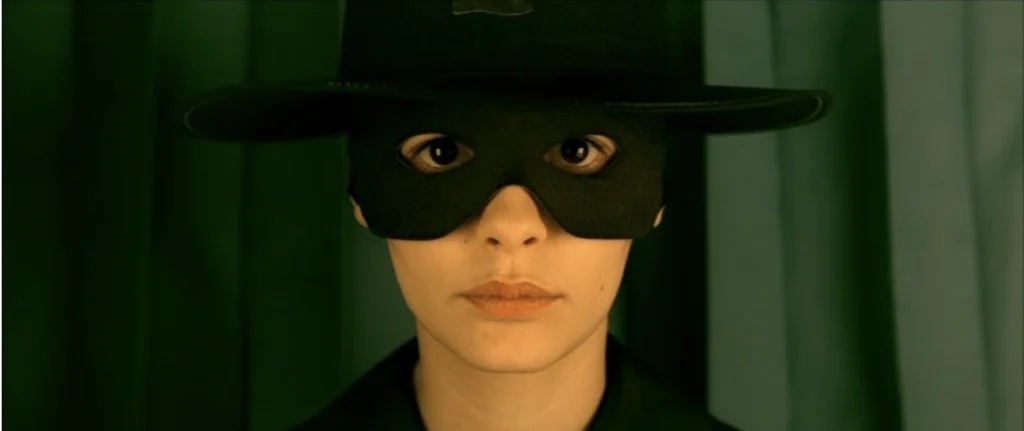
Consider a nun’s habit or a hijab. In theory, both are meant to reduce attention directed toward appearance. Yet in practice they also attract attention. They make a statement.
For a long time, I thought what bothered me most was sexualization. I still dream of a world in which people see a human being before they see a woman or a man.
But visibility itself seems to attract attention. Not only physical beauty or exposed bodies, but symbols, difference, and any story that can be projected onto another person. In a habit, you become “a nun”, in a hijab, “a Muslim woman”, in bright clothes, “an extravagant woman”, in grey, “a modest one.” Social imagination works quickly. It constantly creates categories because categories save cognitive effort.
We rarely see a person. Instead, we see our explanation of that person. A scarf I once wrapped around my head because of the cold immediately attracted questions because it reminded people of a hijab. Until that moment, it had simply been a scarf.
A Crisis of Presence
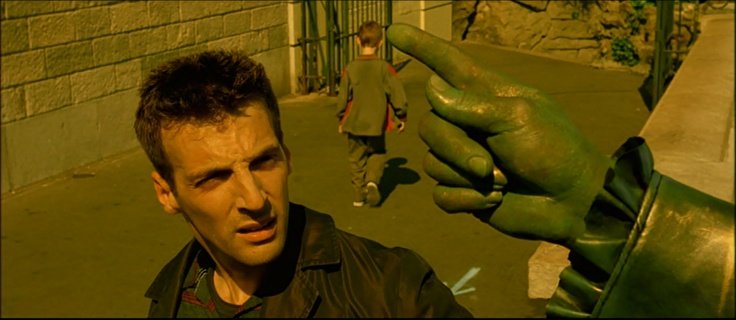
It seems to me that contemporary culture is experiencing a crisis of presence. We constantly look at one another, yet increasingly struggle to look together at something beyond ourselves. Social media have amplified a tendency that already existed, turning visibility into a form of capital and human attention into a scarce resource over which constant competition takes place.
The problem is not that we no longer have shared objects of attention. Wars, crises, social movements, and collective challenges repeatedly draw us toward something larger than ourselves. The problem is that so much of contemporary culture is organized around observing people rather than attending to ideas, phenomena, and processes. We watch one another, evaluate one another, and analyze one another so intensely that we sometimes stop noticing what we are trying to point out to each other.
Perhaps that is why the man saw me rather than the rainbow. Perhaps that is why the photograph became heavier than the moment it was meant to preserve. And perhaps that is why I increasingly think that attention itself is not the greatest luxury of our time. There is already more than enough attention. The real luxury is finding people who can look not only at you but together with you. People who can see not only the one who points, but also what is being pointed at. People who do not confuse the rainbow with the person pointing toward it.