I am African. Everything that might make me look Latina is just a love for potatoes. It so happened that I was born a white Ukrainian woman, and my destiny with Ukraine is intertwined like a braid, but I understand my origin very well. In fact, our origin. Because if you remove labels like “race,” “type,” “appearance,” what remains is only the fact that we all come from a single root. We just walked very different paths for a long time.
Зміст
We are not different “species”, we are variations
The idea of “races” sounds as if there are clear biological groups, as if each of them has its own set of traits. But reality is mobility, or more commonly: life is movement. For thousands of years, humans have been moving: leaving Africa, spreading, returning, mixing. There was no moment when one group “closed off” and became separate forever. We have constantly flowed into one another. That is why our boundaries and divisions are purely social constructs.
Skin color is the most obvious example. But it is not about “race”, it is about the sun. More ultraviolet radiation — more melanin — darker skin. Less sun — lighter skin, so the body can produce vitamin D. A simple environmental influence, the beauty of interaction with nature, being part of in fact. There is no line where dark ends and light begins; there is a gradient.
Reality breaks the patterns
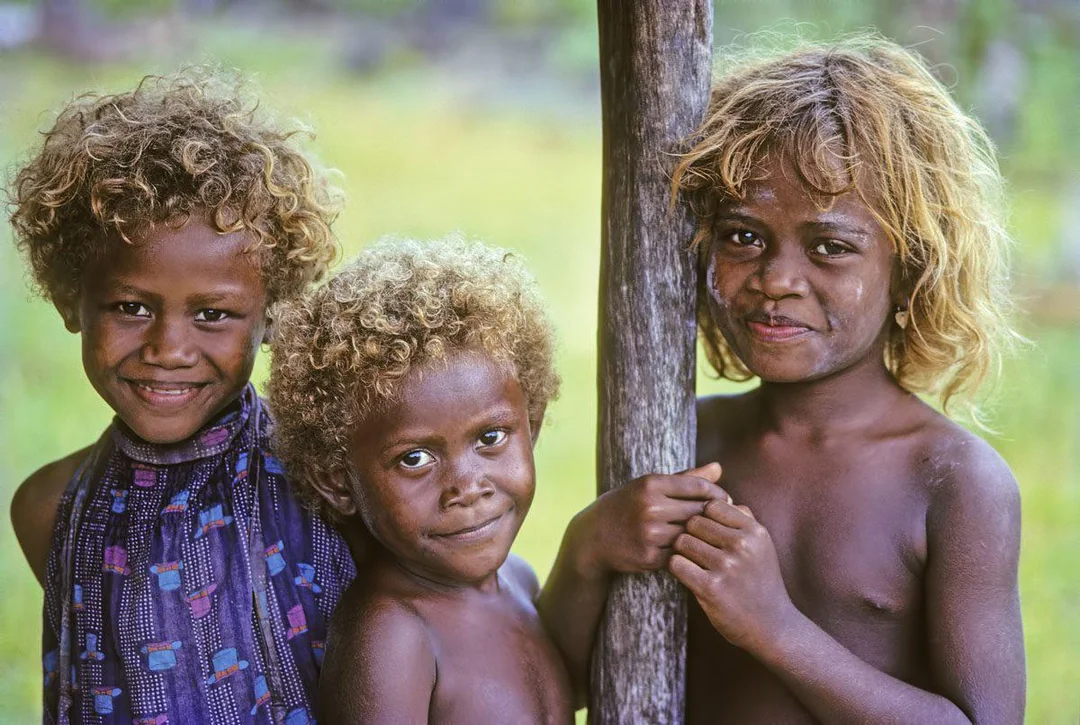
There are examples that clearly show how conditional our ideas are. In the Solomon Islands, there are people with dark skin and naturally light hair. Not dyed, not “inherited” from Europeans. It is a separate genetic mutation that appeared there. A trait we automatically label as “European” exists independently of Europe. The same applies to everything else: curly and straight hair, nose shape, facial features, eye color. None of this “belongs” to any race; these are simply traits that are more common in some places and rarer in others.
If we look at DNA, the picture becomes even less black and white. Most genetic diversity exists within any group of people, not between groups. That means two “similar” people can differ more from each other than a “similar” and a “different” person. Doesn’t sound true? But it is true.
So who are we?
If there are no clear boundaries and no “pure” traits, then what is race? It is a way we have learned to organize people. A social framework we created to simplify the world. And who we are within it is up to each person.
I was born in Ukraine — a fairly homogeneous country, largely due to historical circumstances. I hardly saw “others”, but I felt otherness within myself. Interestingly, after emigrating to multicultural UAE, I felt more at home than at home itself. I am drawn to differences, despite the understandable fears about them.
After ten years of migration across three countries, I learned more about myself. After all personal experience of observation and communication, I still catch myself categorizing people, tempted to speak in stereotypes. Because that is how our brain works. We want to sort everything into boxes and feel safe, enjoying the illusion of understanding. But people are complex and very different. We magically find soulmates across other continents, sometimes even among those we are used to seeing as distant or hostile.
Yes, humans are strongly influenced by environment, but they are still very different. Whether you are a criminal or not, a murderer or not, does not depend on skin color, nationality, or religion.
I would never want to live in a world without all the cuisines of the world, where every dish still tastes different depending on who cooks it, what ingredients are used, and in what mood it was cooked. The less diversity there is, the more boring it becomes, the fewer places where you can recognize yourself.
Let’s be
When I say “I am African,” it is not about a passport, not about skin or hair color. Unfortunately, it is not even about dance in the blood. It is about memory of the species. About the fact that we all once came from the same place, and still carry it within us, even if we look, speak, and behave very differently. And perhaps this is the least obvious but most honest commonality we have. Holding on to it, we can survive as a species.