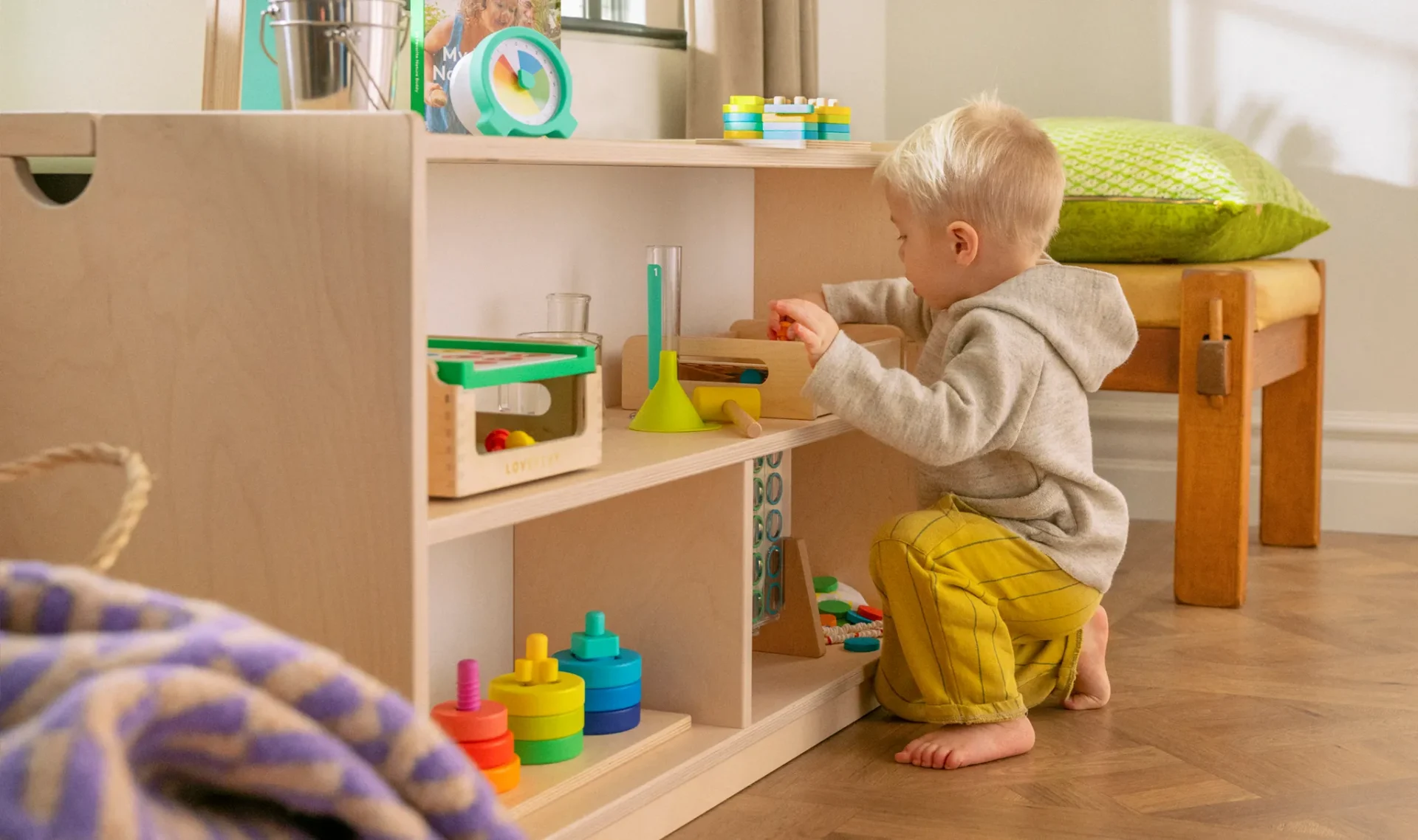
A friend recently asked me how I manage to maintain a “Montessori style” in the toy world my son and I share. It made me realize that, from his very first toys until now, we’ve actually managed to keep things minimal and orderly. We don’t have the problem of toys being left scattered around — except for what I’d call “working chaos.”
Across eight moves over my son’s eight years, we’ve always had a cabinet with eight compartments where it’s clearly visible what goes where, a classic play mat with a road pattern, and a minimal number of toys. This structure works so well that I’ve never seen any reason to change it. Earlier I wrote about toys for the youngest age, our toys up to age 2 and at 2.5—and since then, the organization hasn’t changed at all.
What are you playing with now?
By regularly asking “what are you playing with now?” and “what don’t you need now?”, we’ve been able to filter out which toys resonate most with the child. At different stages, we tracked which skill he wanted to refine through play, and over time a clear pattern emerged of the types of toys he enjoys most. That’s what we focused on — nothing extra.
Anything the child doesn’t use, temporarily or permanently, goes into storage. From time to time, he either asks for something from there, or we take things out and review them together. If he doesn’t play with a toy for a while, I put it away again.
When he occasionally asks me to buy something specific, I also check whether he really needs it right now — is it just a whim, or something he’d actually use? A series of questions and observing his behavior help me figure that out. And if I see that the toy truly fits an unmet need, then I buy it. This happens very rarely — usually for a birthday, and maybe one more time a year.
What the child actually plays with
The toys that resonate most with the child are characterized by versatility and minimalism.
LCD drawing tablet
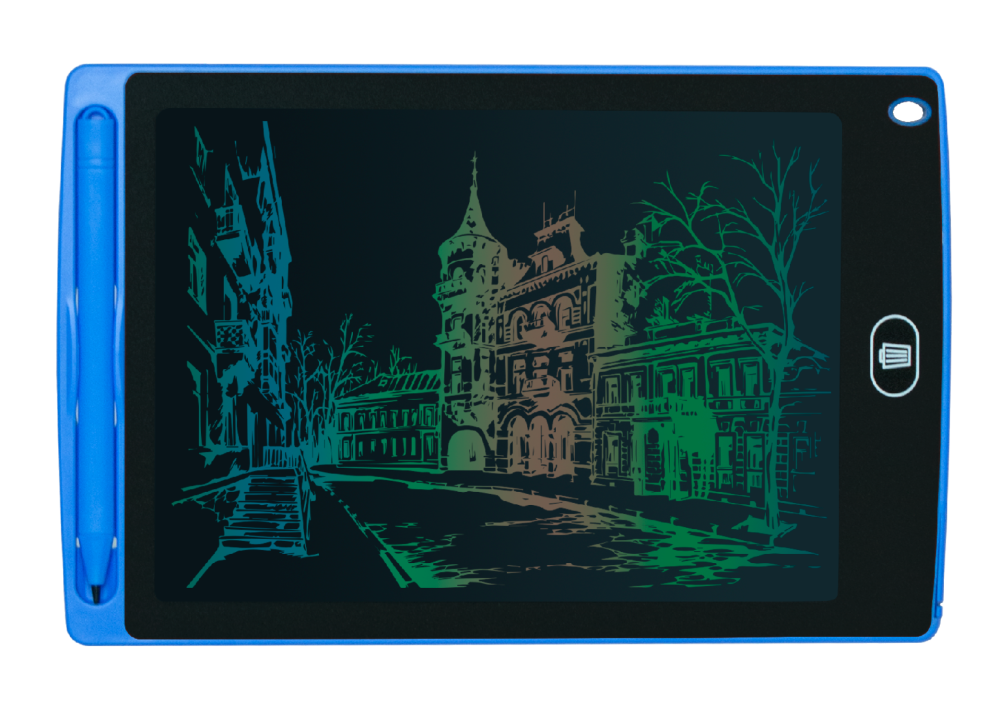
This includes, in particular, an LCD drawing tablet, which he loves because he can erase whenever he wants and start over. It’s an inexpensive and practically everlasting item, although we’ve broken it a few times and bought it again due to intensive use.
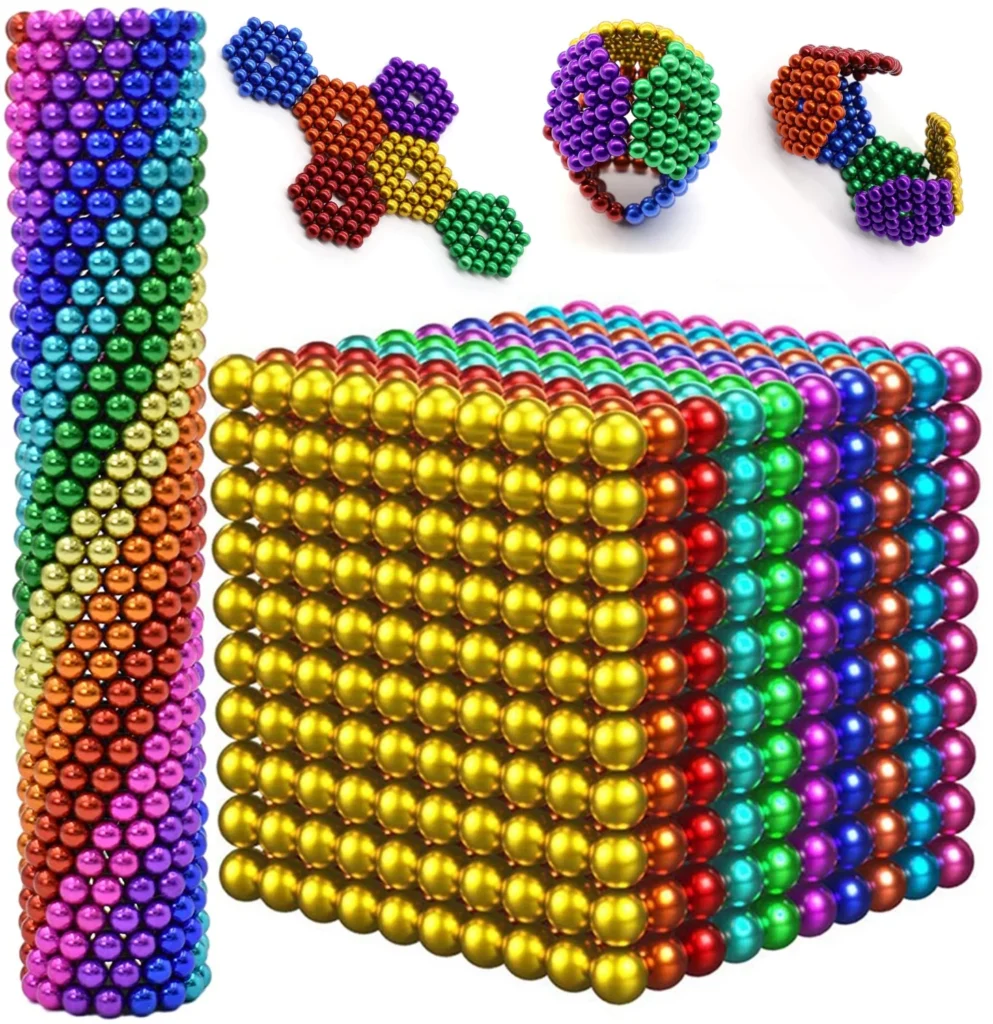
Magnetic cube
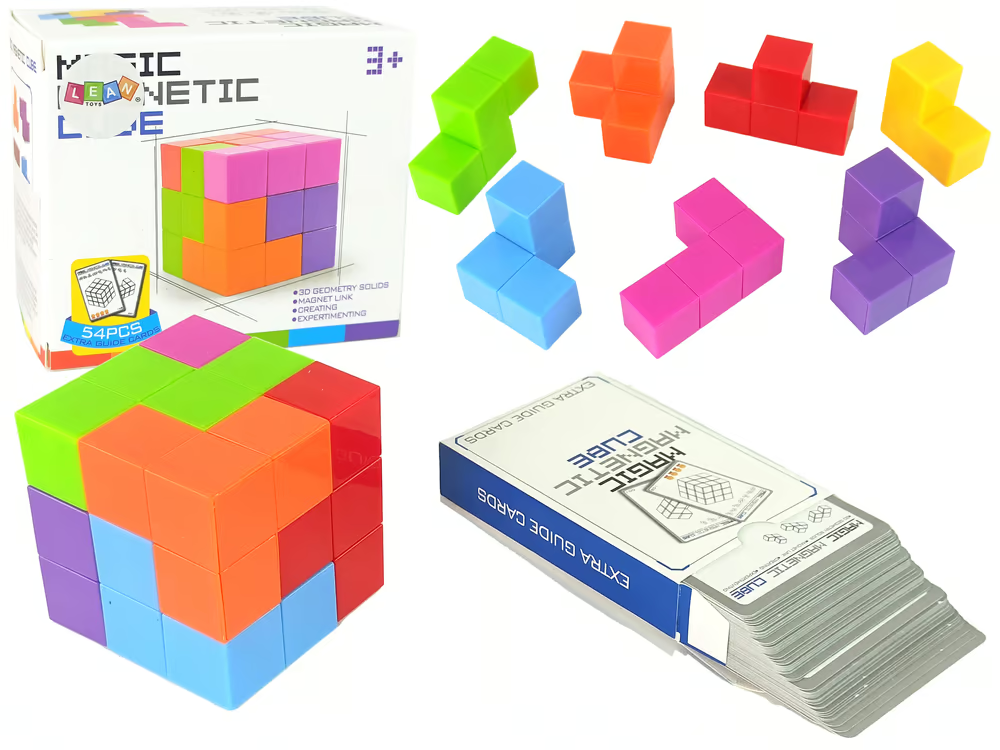
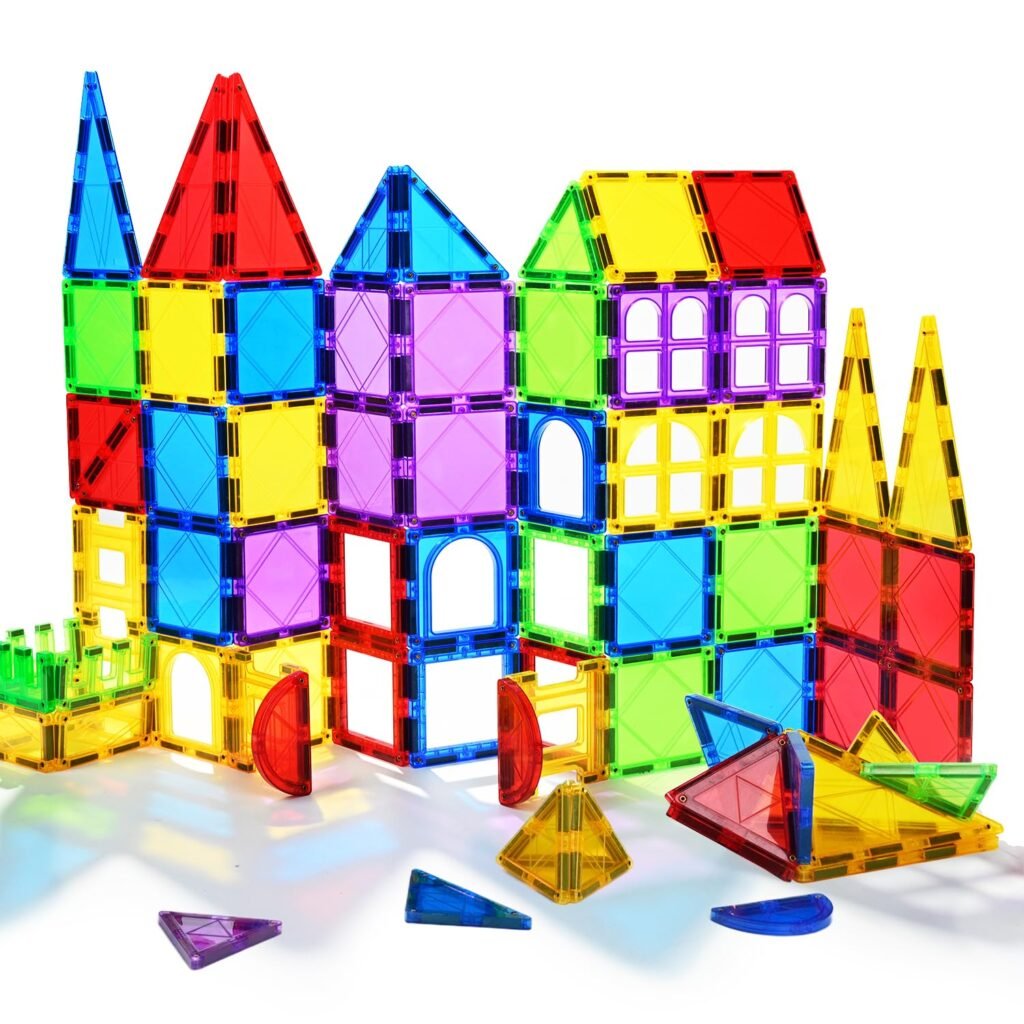
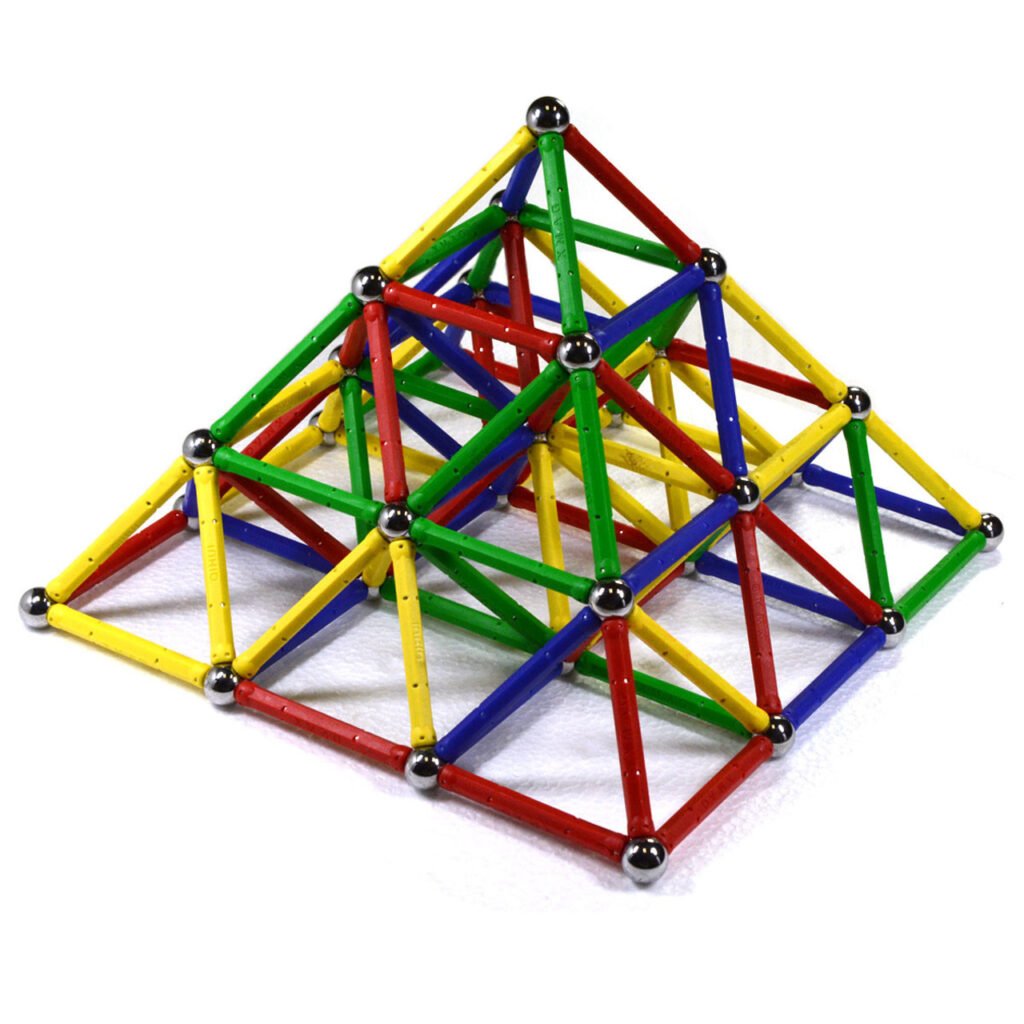
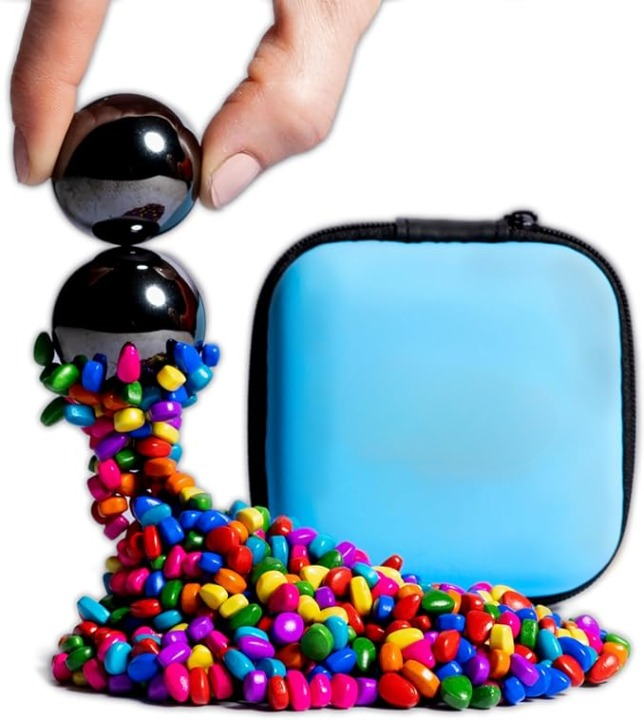
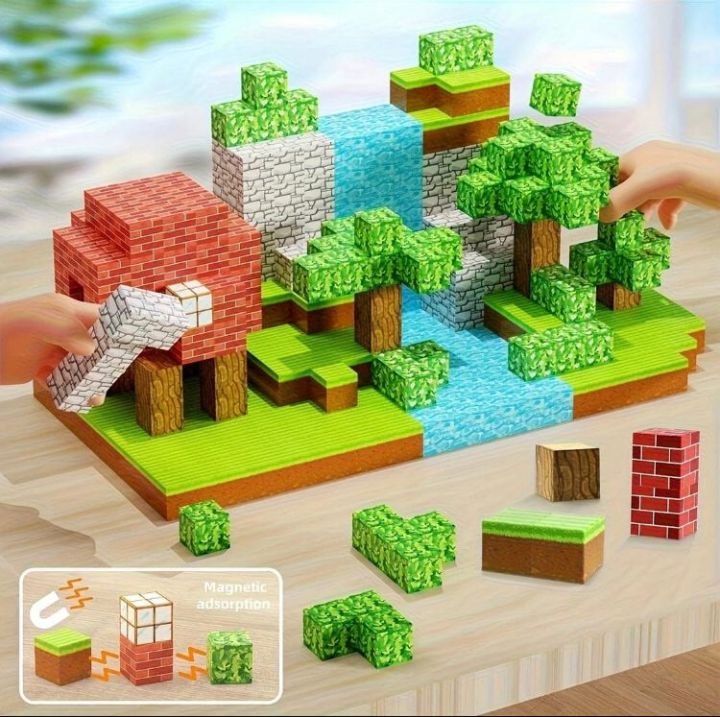
A magnetic cube that can be assembled in a huge number of ways. This is his absolute favorite toy, and he’s been completely absorbed by it from age 4 until now (8). Other magnetic toys are also popular because they allow for a lot of creativity, but none have surpassed the cube.
Thermo mosaic
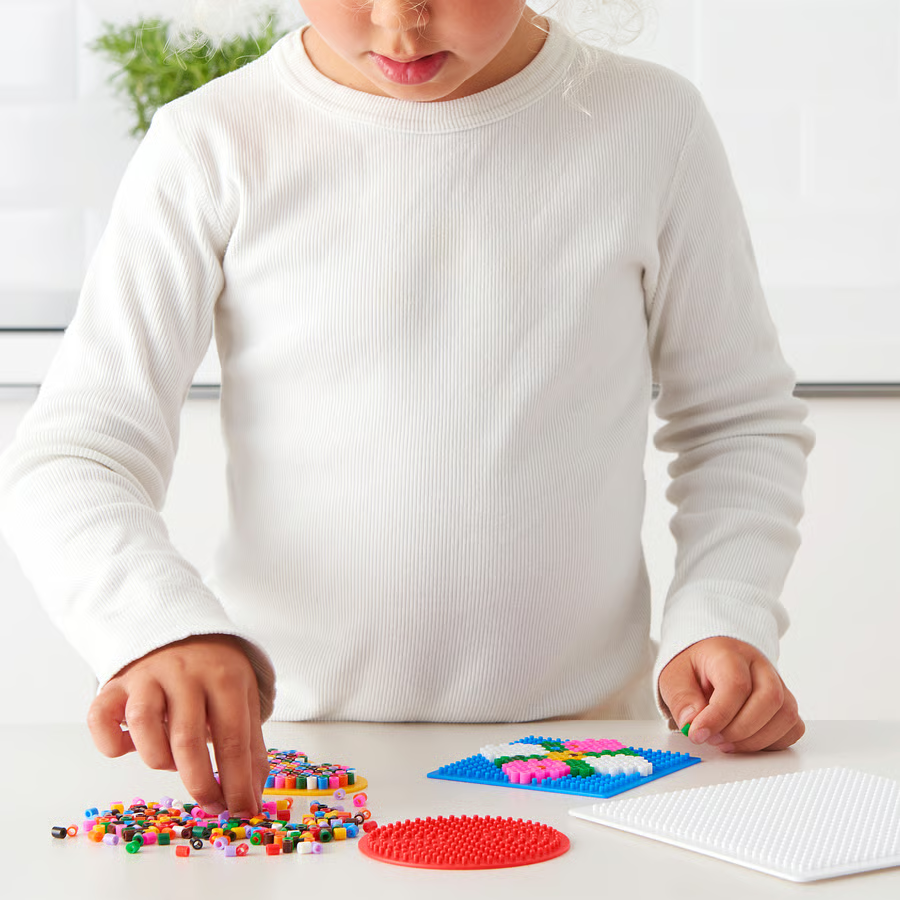
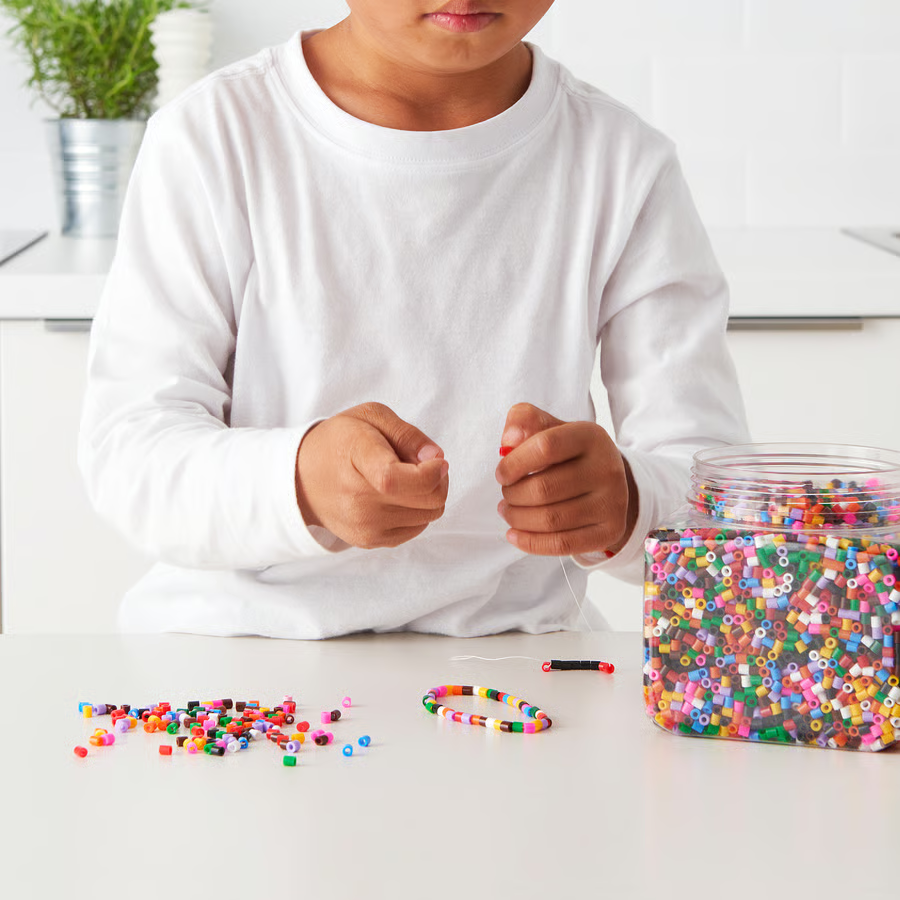
The thermo mosaic is a toy we discovered thanks to Swedish preschools and schools. Colorful plastic beads are arranged on a heat-resistant plastic board in a specific pattern, then fused together by ironing through parchment paper. The result is a collectible creation! Both my child and I get completely absorbed in it. It’s probably one of the best things for people with concentration challenges and for developing fine motor skills and attention.
Fidgets
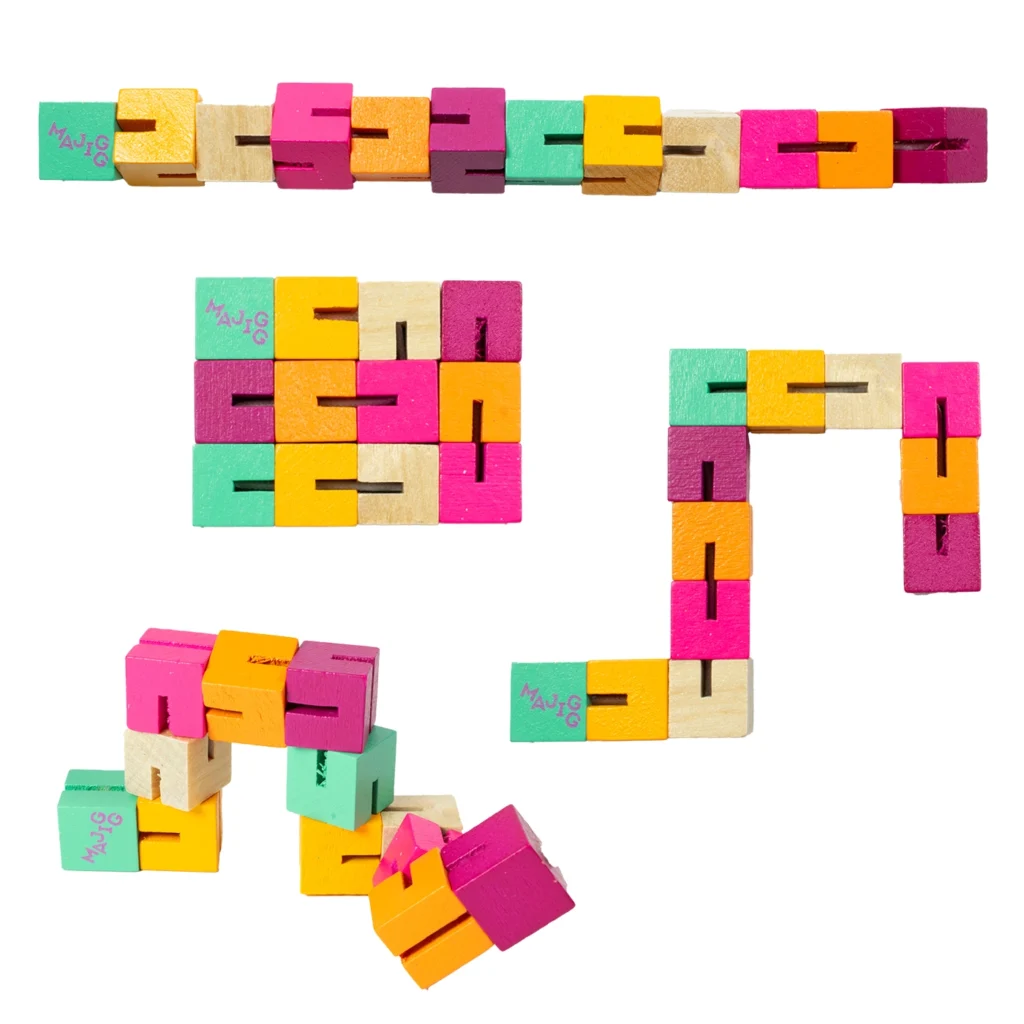
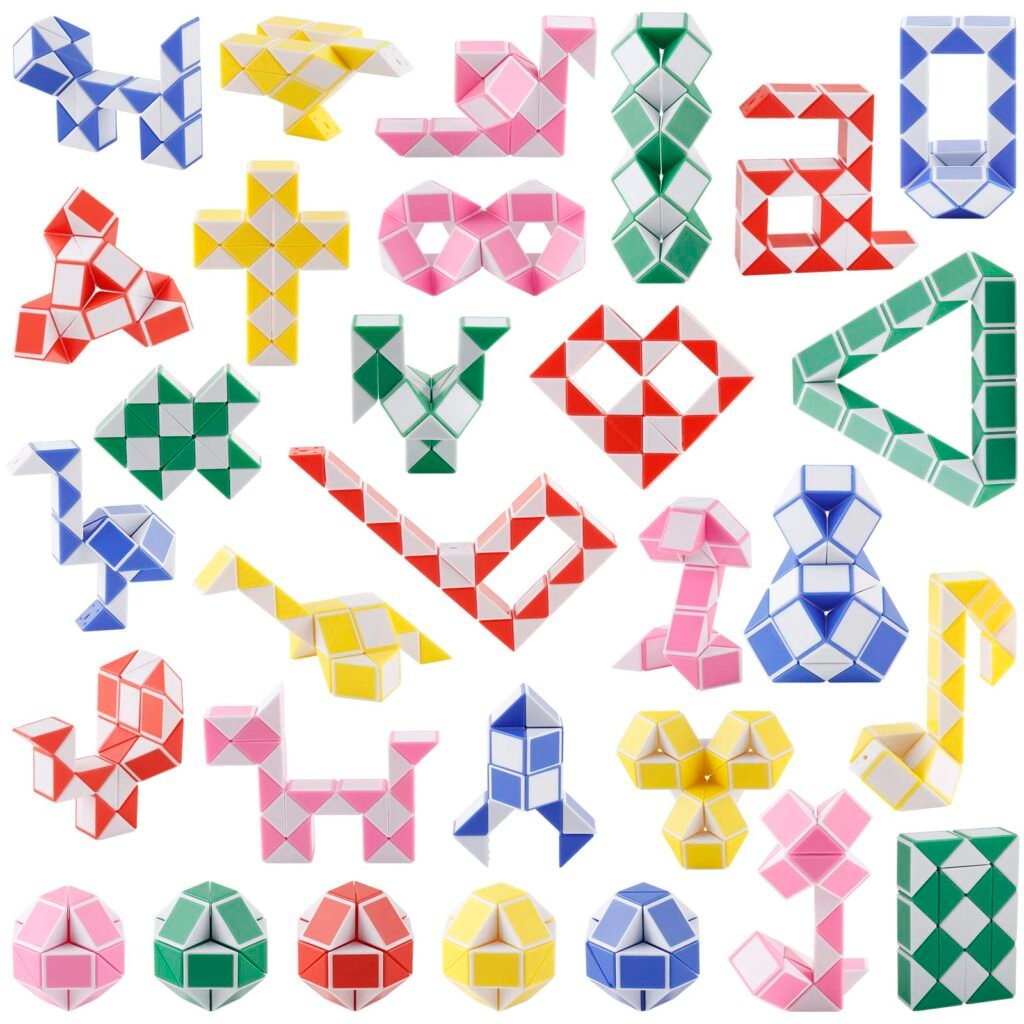
Fidgets are an entire category of toys. My child’s favorites are, again, the ones that allow for a lot of creativity — particularly the so-called twists.
Everyday materials
One section of my child’s cabinet is entirely filled with empty toilet paper rolls. These are used to build towers, create fuzzy creatures, and more. There’s a yogurt container filled with chestnuts and another jar filled with pebbles.
There’s also Play-Doh and a bunch of drawing tools—for paper, clothing, and face painting. We have a mat, a piano, and board games—though the only one I can actually play is chess.
The most important item I keep in every room, though, is the “bullshit box.” Everything that doesn’t have a clear place goes in there: small objects, findings, crafts, hair ties, keychains, flashlights. It’s a permanent box. Occasionally, something gets thrown out, but usually it just stays as it is, small, literally like a shoebox.
Fortune teller
Another toy that my child really liked from school — and often makes and decorates in different ways—is a kind of flip card set. Someone calls out a number, and when you unfold it, you see a question or a task. It can be used as a game, a tool for self-reflection, or even for everyday routines.
Soft toys
Soft toys are, of course, indispensable. My child loves them and always sleeps with them. There aren’t many, but they’re loyal companions. One of them is a bunny filled with metal beads. You can warm it in the microwave and cuddle with it at night.
For his eighth birthday, he received his long-dreamed-of off-road remote-controlled car. As for video games, we removed them from use, agreeing that they overstimulate and negatively affect our relationship. What remains is figuring out which engaging shows are appropriate for the tablet—because if given free rein, it can harm our relationship too. So far, our best find has been Hilda.